
Why Your Whole-House Humidifier is Leaking and Ruining Your Simsbury Utility Room
Your whole-house humidifier should add comfort, not create a puddle on your utility room floor. If you’re standing in Simsbury looking at water pooling near your furnace, you need to act fast. Connecticut’s cold winters drive heavy humidifier use, and that constant moisture flow can overwhelm failing components. A small leak today becomes structural rot, mold growth, and ruined flooring tomorrow. Professional Water Extraction and Drying for Downtown Hartford Office Buildings.
The good news is that most humidifier leaks have clear mechanical causes. The bad news is that water damage spreads quickly behind walls and under floors. This guide shows you how to stop the leak immediately, identify the most common failure points, and know when the water damage needs professional restoration before it destroys your Simsbury home.
Immediate Response: How to Stop a Leaking Furnace Humidifier
When you see water dripping from your humidifier, every minute counts. The first step is cutting off the water supply before the leak gets worse. Find the small saddle valve on the copper water line near your furnace. Turn it clockwise until it stops. This valve controls water flow to the humidifier’s solenoid valve.
Next, shut off power to your HVAC system. Find your circuit breaker panel and switch off the breaker labeled “Furnace” or “HVAC.” This prevents electrical hazards while you inspect the unit. If water has reached electrical connections, do not touch anything until power is off.
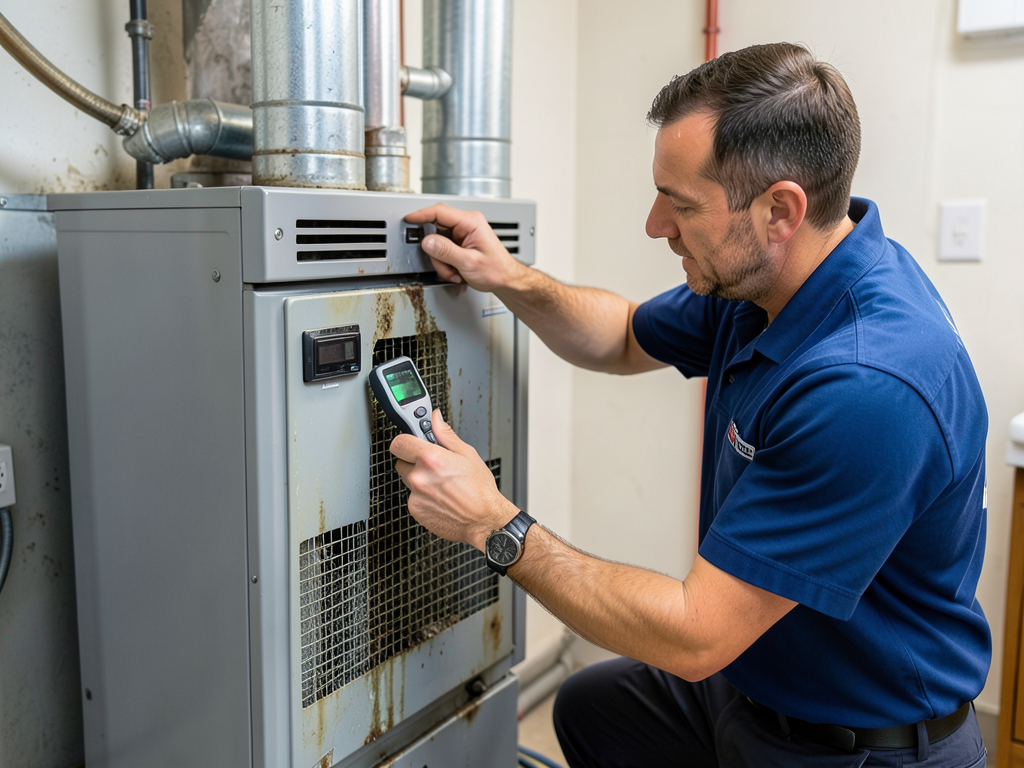
Diagram showing the location of the saddle valve, solenoid valve, and power disconnect for a typical whole-house humidifier installation.
Now place towels or a shallow pan under the leak to catch dripping water. If the leak is substantial, use a wet vacuum to remove standing water from the floor. Check nearby walls and baseboards for moisture wicking up from the floor. Water travels along the path of least resistance, and your utility room’s drywall can absorb moisture from the floor within hours.
5 Common Reasons Your Furnace Humidifier is Leaking
Understanding why your humidifier leaks helps you decide whether to repair it yourself or call a professional. These five failure points account for nearly all whole-house humidifier leaks in Connecticut homes. EPA Mold Information.
1. Clogged Drain Line Causes Overflow
Your humidifier has a drain line that removes excess water from the evaporator pad. When this line clogs with mineral deposits from Connecticut’s hard water, water backs up and overflows the collection tray. The drain line often runs from the bottom of the humidifier to a nearby floor drain or condensate pump.
Signs of a clogged drain include water overflowing the front of the unit rather than draining properly. You might also notice white scale buildup around the drain opening. Simsbury’s water contains high levels of calcium and magnesium, which precipitate out as scale when water evaporates.
2. Scale Buildup on Evaporator Pad Blocks Water Flow
The evaporator pad holds water that your furnace fan blows across to add moisture to the air. Over time, mineral deposits from hard water create a crust on the pad. This scale buildup prevents proper water distribution and can cause water to pool and leak.
When scale blocks the pad, water cannot flow through properly. It accumulates in the collection tray until it overflows. Most evaporator pads need replacement every heating season in Connecticut due to our mineral-rich water supply.
3. Solenoid Valve Failure Causes Constant Water Flow
The solenoid valve acts as a water faucet for your humidifier, opening when humidity drops and closing when the desired level is reached. When this valve fails, it can stick open and allow continuous water flow. A failed solenoid can waste 1-2 gallons of water per hour.
Signs of solenoid failure include water dripping constantly from the drain line even when the furnace is off. You might also notice the humidifier running when the furnace isn’t heating. This continuous flow overwhelms the drain system and creates the puddles you see on your utility room floor.
4. Excessive Water Pressure Forces Leaks Through Seals
Connecticut homes typically have water pressure between 40-60 PSI. When pressure exceeds 80 PSI, it can force water through seals and connections that normally hold tight. High pressure also stresses the solenoid valve and can cause premature failure.
You can check your home’s water pressure with an inexpensive gauge that screws onto an outdoor faucet. If pressure reads above 75 PSI, you need a pressure reducing valve installed. High pressure doesn’t just affect your humidifier – it stresses every plumbing connection in your home.
5. Improper Humidistat Settings Cause Continuous Operation
The humidistat controls when your humidifier runs based on relative humidity levels. If set too high or if the unit malfunctions, it may run continuously. During Connecticut winters, outdoor temperatures can drop to single digits. At these temperatures, even 30% indoor humidity can cause window condensation.
Most manufacturers recommend humidity levels between 30-40% during cold weather. Higher settings can cause condensation on windows, which then runs down and creates the appearance of a humidifier leak. The real problem is excess humidity, not a mechanical failure.
The Hidden Danger: Water Damage Behind the Furnace
What you see on your utility room floor is often just the tip of the iceberg. Water from a leaking humidifier travels along the path of least resistance, seeping into wall cavities, under flooring, and around the furnace base. This hidden moisture creates perfect conditions for mold growth and structural damage.
Within 24-48 hours of water exposure, mold spores that naturally exist in all homes begin to multiply. The dark, warm environment behind your furnace provides ideal growing conditions. Mold feeds on drywall paper, wood studs, and insulation, compromising your home’s structural integrity. Soggy Insulation.
Water also causes hardwood floors to cup and warp. Even sealed concrete can develop efflorescence – white mineral deposits that appear when water evaporates and leaves minerals behind. Carpet padding absorbs water like a sponge, creating a breeding ground for bacteria and mold that can cause health problems.
The furnace itself faces risks from prolonged water exposure. Water can corrode the heat exchanger, damage electrical components, and create safety hazards. A compromised heat exchanger can allow carbon monoxide to enter your home’s air supply.
Professional Water Restoration vs. DIY Cleanup
Deciding whether to handle water cleanup yourself depends on several factors. Small spills on sealed concrete floors that dry within 24 hours rarely need professional help. However, water that has spread beyond the immediate leak area or has been present for more than a day requires expert assessment. Fast Sewage Cleanup Services for East Hartford Residents Facing a Backup.
Call a professional if water has seeped under flooring, into wall cavities, or if you notice musty odors developing. Professional water restoration technicians use moisture meters to detect hidden dampness that you cannot see or feel. They also have industrial-grade dehumidifiers and air movers that remove moisture much faster than household fans.
Insurance companies often require professional documentation of water damage for claims processing. A certified water restoration company provides detailed reports showing moisture levels, damage extent, and remediation steps taken. This documentation proves invaluable when dealing with insurance adjusters.
Professional restoration also addresses secondary damage prevention. Technicians apply antimicrobial treatments to prevent mold growth, even in areas that appear dry. They can also identify structural issues that need repair before they become major problems.
Hartford-Specific Maintenance Tips for Humidifier Longevity
Connecticut’s climate and water quality create unique challenges for whole-house humidifiers. Our state’s water hardness averages 15-20 grains per gallon, among the highest in the country. This mineral content means more frequent maintenance is necessary to prevent scale buildup.
Replace your evaporator pad annually, typically in early fall before heating season begins. Simsbury’s water contains enough minerals to create significant scale in just one heating season. Annual replacement prevents the overflow issues that cause most humidifier leaks.
Clean the drain line every six months using a mixture of white vinegar and water. Pour the solution through the drain line and let it sit for 30 minutes before flushing with clean water. This removes scale buildup that can cause clogs and overflow.
Check your home’s water pressure annually. Connecticut’s aging infrastructure can cause pressure fluctuations that stress plumbing components. Install a pressure gauge on an outdoor faucet and check readings during different times of day. Consistent readings above 75 PSI indicate the need for a pressure reducing valve.
Consider installing a whole-house water softener if your home’s water hardness exceeds 15 grains per gallon. Softer water reduces scale buildup throughout your plumbing system, extending the life of your humidifier and other water-using appliances.
During particularly cold snaps, monitor indoor humidity levels with a hygrometer. When outdoor temperatures drop below 20°F, reduce your humidistat setting to prevent window condensation. This simple adjustment can prevent the appearance of leaks caused by excess humidity.
When to Replace vs. Repair Your Humidifier
Age matters when deciding between repairing a leaking humidifier or replacing it entirely. Most whole-house humidifiers last 10-15 years with proper maintenance. Units older than this often develop multiple failure points that make continued repairs uneconomical.
Consider replacement if your unit requires frequent repairs, if replacement parts are no longer available, or if the unit lacks modern features like automatic humidity control. New humidifiers offer better efficiency, more precise control, and improved reliability compared to units manufactured a decade ago.
Energy efficiency also plays a role in the replacement decision. Older humidifiers can waste significant water through continuous drainage, while newer models use water more efficiently. Over a heating season, the water savings alone can offset much of the replacement cost.
Installation quality affects longevity. Units improperly installed or maintained often fail prematurely regardless of age. If your humidifier has been problematic throughout its life, replacement with professional installation often provides better long-term value than continuing to repair a chronically problematic unit.
Preventing Future Leaks Through Regular Maintenance
Preventive maintenance saves money and prevents the water damage that forces emergency restoration calls. Create a maintenance schedule that includes quarterly inspections of your humidifier and its connections. Look for signs of corrosion, loose fittings, or mineral buildup around the unit.
Test the solenoid valve annually by turning the humidistat to its highest setting and listening for the click of the valve opening. After 30 seconds, turn it back down and listen for the click closing. No sound indicates a valve that needs replacement before it fails completely.
Check the water supply line for signs of wear or corrosion. Copper lines can develop pinhole leaks over time, especially in areas with aggressive water chemistry. Replace supply lines showing green corrosion or white scale buildup.
Inspect the area around your furnace annually for signs of previous water damage. Water stains on the floor or walls indicate past leaks that may recur if the underlying cause wasn’t addressed. Address these issues before they cause major damage during your next heating season.
Consider installing a water alarm near your humidifier. These inexpensive devices sound an alert when they detect moisture, giving you early warning of developing leaks before major damage occurs.
Insurance Coverage for Humidifier-Related Water Damage
Most homeowners insurance policies cover sudden and accidental water damage, including that caused by appliance failures like a leaking humidifier. However, coverage details vary significantly between policies and insurance companies.
Standard policies typically cover damage to floors, walls, and personal property caused by the leak. They may not cover the cost of repairing or replacing the failed appliance itself. Some policies also exclude coverage for damage resulting from lack of maintenance or neglect.
Document everything if you need to file a claim. Take photos of the damage, keep receipts for emergency repairs, and save all communication with your insurance company. Professional water restoration companies can provide detailed damage assessments that support your claim.
Ask your insurance agent about specific coverage for HVAC-related water damage. Some companies offer endorsements that provide broader coverage for appliance failures. Understanding your coverage before a leak occurs helps you make informed decisions during an emergency.
Time matters when filing claims. Most policies require prompt reporting of damage, and delays can affect coverage. Contact your insurance company as soon as you discover significant water damage, even if you’re still determining the full extent of the problem.
Health Risks of Untreated Water Damage
Standing water and damp materials create health hazards that extend beyond property damage. Mold growth, which can begin within 24-48 hours of water exposure, releases spores that cause respiratory problems, allergic reactions, and other health issues.
Certain molds produce mycotoxins that can cause serious health problems, particularly in children, elderly individuals, and those with compromised immune systems. The dark, warm environment behind your furnace provides ideal conditions for these harmful molds to flourish.
Bacteria thrive in standing water and damp organic materials. These microorganisms can cause infections, especially if you have cuts or abrasions that come into contact with contaminated water. The combination of moisture and warmth accelerates bacterial growth exponentially.
Dust mites proliferate in humid environments. These microscopic creatures trigger allergic reactions and asthma attacks in sensitive individuals. Maintaining proper humidity levels prevents dust mite infestations while still providing comfortable indoor air quality.
Professional water restoration includes antimicrobial treatments that eliminate these health hazards. DIY cleanup often misses hidden moisture that continues to support biological growth long after visible water disappears.
Choosing the Right Water Restoration Company in Hartford
When water damage from your humidifier requires professional restoration, choosing the right company matters. Look for firms with specific experience in HVAC-related water damage, as this requires different approaches than plumbing or roof leaks.
Certification indicates professional training and adherence to industry standards. The Institute of Inspection, Cleaning and Restoration Certification (IICRC) sets standards for water damage restoration. Companies following these standards provide more reliable results than those using improvised methods. IICRC Standards.
Response time proves critical in water damage situations. The first 24-48 hours determine whether you’re dealing with simple cleanup or major restoration involving mold remediation and structural repairs. Choose companies offering 24/7 emergency response with guaranteed arrival times.
Insurance experience helps navigate the claims process. Restoration companies familiar with insurance procedures can provide documentation that satisfies insurance adjusters and speeds claim approval. They also understand which repairs are necessary versus optional upgrades.
Local knowledge benefits Hartford homeowners specifically. Companies familiar with Connecticut’s building codes, climate challenges, and common construction methods provide more appropriate solutions than out-of-area firms unfamiliar with local conditions. The Best Local Mold Removal and Remediation Experts in Glastonbury.
Frequently Asked Questions
How much does professional water restoration cost for humidifier leaks?
Costs vary based on damage extent, but most humidifier leak restorations range from $500 to $3,000. Small spills affecting only flooring might cost $300-$500, while extensive damage involving mold remediation and structural repairs can exceed $5,000. Insurance often covers sudden leaks but may exclude damage from lack of maintenance.
Can I repair a leaking humidifier myself?
Simple repairs like replacing an evaporator pad or cleaning a drain line are DIY-friendly. However, solenoid valve replacement, water line repairs, and electrical troubleshooting require professional skills. If you’re unsure about any repair step or if water has spread beyond the immediate area, call a professional to avoid safety hazards and further damage.
How long does it take for mold to grow after a humidifier leak?
Mold can begin growing within 24-48 hours of water exposure. The actual colonization time depends on temperature, humidity levels, and available organic material. Dark, warm areas behind your furnace provide ideal conditions for rapid mold growth. This timeline underscores why immediate water removal is critical.
Should I turn off my humidifier if I see a small leak?
Yes, turn it off immediately using the saddle valve on the water supply line. Even small leaks can cause significant damage over time, and the leak will worsen if left unaddressed. Shut off power to the HVAC system as well for safety, then assess whether you can handle the repair or need professional help. How to Handle a Flooded Basement in Your West Hartford Home Today.
How can I prevent my humidifier from leaking during winter?
Annual maintenance prevents most leaks. Replace the evaporator pad each fall, clean the drain line twice yearly, check water pressure, and inspect all connections for corrosion or wear. During extreme cold snaps, reduce humidity settings to prevent window condensation that can mimic leaks. Consider professional inspection before each heating season.
Take Action Before Your Utility Room Becomes a Mold Factory
A leaking humidifier creates more than a puddle – it threatens your home’s structure, your family’s health, and your peace of mind. Connecticut’s hard water and cold winters make whole-house humidifiers particularly vulnerable to the failures described in this guide. The difference between a simple repair and a major restoration project often comes down to how quickly you respond.
If you’re seeing water around your furnace in Simsbury or anywhere in the Hartford area, don’t wait for the problem to fix itself. Water damage spreads exponentially, and what starts as a small leak can become a major restoration project within days. The cost of professional water damage restoration is always less than the cost of ignoring the problem until it becomes severe.
Pick up the phone and call (860) 743-9993 today to schedule your inspection. Our Hartford-based team responds 24/7 to water damage emergencies and can be at your Simsbury home quickly to assess the damage and begin restoration. Don’t let a simple humidifier leak turn into a mold-infested utility room that requires extensive demolition and reconstruction.
Whether you need immediate water extraction, professional drying services, or complete restoration of water-damaged areas, we have the equipment, expertise, and local knowledge to handle your humidifier leak properly the first time. Call (860) 743-9993 now and take the first step toward protecting your Simsbury home from water damage.
- Turn Off Water Supply
Locate and turn the saddle valve clockwise to stop water flow to the humidifier.
- Shut Off Power
Switch off the furnace or HVAC breaker at your electrical panel for safety.
- Contain the Water
Place towels or a pan under the leak and use a wet vacuum for standing water.
- Assess the Damage
Check walls, floors, and nearby areas for moisture wicking or hidden dampness.
- Call for Help
Call (860) 743-9993 if water has spread or if you need professional assessment.